Click Thumbnails to Enlarge
Panasonic expands its G-Series with the GX1
By Michael Topham
Product news
07 November 2011 07:30
Earlier this year, Photoanswers attended the Panasonic Digital Imaging Seminar in Rome and of interest at the time was the company’s drive and determination to expand its G-Series range and split its compact line-up of cameras in two separate directions. Five months later, Panasonic has delivered its promise, announcing a new Compact System Camera (CSC) designed to sit between the fashionable GF3 and flagship G3 in the company’s product line.
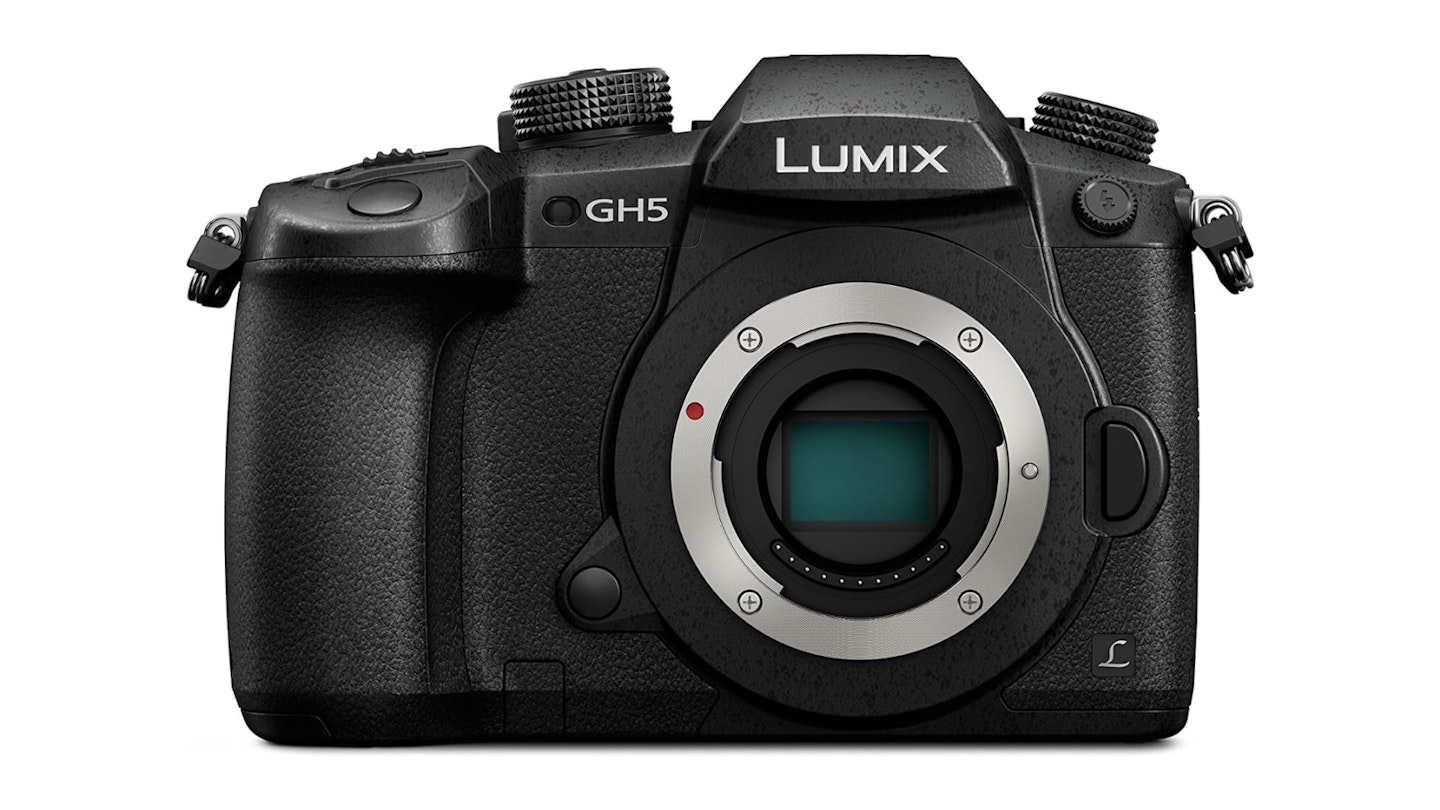
The Lumix GX1 is the latest addition to Panasonic’s G-series line-up and takes much of its inspiration from the earliest GF-model – the GF1. Boasting a robust aluminum chassis and a mode dial on the top-plate, the GX1 is designed to be a premium member of the G-series range, combining a practical sized footprint with an impressive array of features. Rather than adopting a 12.1Mp sensor from the GF1, GF2 or GF3, the all-new GX1 employs the same 16Mp sensor from the G3 and provides an impressive 160-12800 ISO range with no drop in resolution at the high end. The sensor isn’t the only feature the GX1 adopts from the G3, either. It also inherits Pinpoint AF and Full Area Focusing that enables resizing of the AF point from the edge of the touchscreen so you can reposition the AF point anywhere within the frame. AF modes include multiple-area AF, Face Detection and AF tracking and what’s more, focus and defocus can immediately be set to the subject or to the background by simply tapping the screen. A digital level gauge ensures horizons are photographed perfectly level at the point of capture, too, which marks the first G-Series camera to boast this feature.
As well as two Custom modes, which are quickly and easily accessed from the mode dial, the GX1 offers a plethora of dedicated function (Fn) buttons to which 25 functions can be assigned. The menu system has also seen minor development and, rather than adopting the dark grey interface we’re used to seeing on G-Series models, the GX1 has a black based background that’s intended to make menu settings clearer and easier to read.
Full HD video recording has become standard on practically every Compact System Camera and the GX1 is no exception, with the 16Mp sensor allowing the GX1 to record Full HD AVCHD 1920x1080 50i movies with stereo sound. Interestingly there’s also the option to record in the MP4 format, the advantage being that it lowers the size of movie files, making them more versatile for editing and uploading to video sites such as YouTube.
Tying in with the launch of the GX1, Panasonic has also developed a new electronic viewfinder – the LV-F2, that’s designed to fit and connect via the camera’s hot-shoe accessory port. It uses a small locking mechanism to keep it secure and boasts an impressive 1.44 million-dot resolution at a price tag just shy of £230.
Offered in gunmetal grey or black, early indications from Panasonic suggest the GX1 will be available in three configurations, with the body-only version costing £499. Two kit options will be made available and the price of the GX1 with the H-F014042 lens (known as the GX1K kit) will be £599, whereas the price of the body with the new H-PS14042 lens (known as the GX1X kit) will be £729.99. Both the body-only and GX1K kit will be available from mid December, but those who’d like the GX1X kit will have to hold out until mid January due to a slight delay in production of the H-PS14042E lens.
First Impressions
The good news with the GX1 is that Panasonic has addressed a handgrip issue experienced previously with the diminutive GF3. Though the GF3 feels comfortable in the hand, it doesn’t offer much in the way of grip, which has always been a cause for concern in the past. The new leather handgrip on the GX1 is much improved and contributes to a more refined and secure feel when held, compared to its entry-level cousin.
The ability to quickly change shooting modes from the mode dial is another reason we’d be tempted to save the extra and opt for the GX1 over the GF3. During our brief hands-on experience at Panasonic’s press event, AF performance was rapid, the touchscreen offered a similar sensitivity to the G3 and the level gauge proved particularly useful when shooting in both landscape and portrait orientations. Though the Panasonic GX1 we used was a pre-production sample we experienced no glitches, interruptions or faults and enjoyed our shooting experience with the VF-F2 viewfinder, which made composition easier on numerous occasions.
In-depth reviews of the Panasonic GX1 will be featured in future issues of Digital Photo and Practical Photography, so watch this space…
GX1 Specification
Image sensor size: 17.3 x 13.0 mm (in 4:3 aspect ratio)
Lens mount: Micro Four Thirds mount
Type: Live MOS Sensor
Total pixels: 16.68 Megapixels
Camera effective pixels: 16.0 Megapixels
Recording file format: Still Image: JPEG(DCF, Exif 2.3), RAW,
MPO (When attaching 3D lens in Micro Four Thirds standard)
Aspect ratio: 4:3, 3:2, 16:9, 1:1
Image quality: RAW, RAW+Fine, RAW+Standard, Fine, Standard,
MPO+Fine, MPO+Standard (with 3D lens in Micro Four Thirds System standard)
Color space: sRGB, Adobe RGB
Continuous recordable time (Motion images): AVCHD with picture quality set to [FSH]: Approx. 140 min with H-PS14042 / Approx. 130 min with H-FS014042 / Approx. 150 min with H-H014
Actual recordable time (Motion images) : AVCHD with picture quality set to [FSH]: Approx. 70 min with H-PS14042 / Approx. 65 min with H-FS014042 / Approx. 75 min with H-H014
AF Type: Contrast AF system
Focus mode: AFS (Single) / AFF (Flexible) / AFC (Continuous) / MF
AF mode: Face detection / AF Tracking / 23-area-focusing / 1-area-focusing/Pinpoint
Touch (1- area-focusing in Face detection / AF Tracking / Multi-area-focusing / 1-area-focusing / Pinpoint)
AF detective range: EV 0 - 18 (ISO100 equivalent)
AF assist lamp : Yes
AF lock: Set the Fn button in custom menu to AF/AE lock or Shutter button halfway pressed in AFS mode
Others: Quick AF, Continuous AF (during motion image recording), AF+MF, Touch shutter, Touch MF Assist
Light metering system: 144-zone multi-pattern sensing system
Light metering mode: Intelligent Multiple / Center Weighted / Spot
Metering range: EV 0 - 18 (F2.0 lens, ISO100 equivalent)
Exposure mode: Program AE, Aperture Priority AE, Shutter Priority AE, Manual, Auto
ISO sensitivity(Standard Output Sensitivity): Auto / Intelligent ISO / 160 / 200 / 400 / 800 / 1600 / 3200 / 6400 / 12800 (Changeable to 1/3 EV step)
Exposure compensation: 1/3EV Step ±5EV
AE lock: Set the Fn button in custom menu to AF/AE lock
AE bracket: 3,5,7 frame, in 1/3, 2/3 or 1 EV Step, ±3 EV
White balance: Auto / Daylight / Cloudy / Shade / Incandescent / Flash / White Set 1, 2 / Color temperature setting
White balance adjustment: Blue/amber bias, Magenta/green bias
Color temperature setting: 2500-10000K in 100K
White balance bracket: 3 exposures in blue/ amber axis or in magenta/ green axis
Type: Focal-plane shutter
Shutter speed: Still Images: 1/4000 ~ 60 and Bulb (up to approx. 2 minutes)
Motion image: 1/16000 ~ 1/30 (NTSC), 1/16000 ~ 1/25 (PAL)
Self timer: 10sec, 3 images/ 2sec / 10sec
Remote control: Remote control with bulb function by DMW-RSL1 (Optional)
Still Image SCN mode: Portrait / Soft Skin / Scenery / Architecture / Sports / Peripheral Defocus / Flower / Food / Objects / Night Portrait / Night Scenery / Illiminatioms / Baby 1, 2 / Pet / Party / Sunset
Movie SCN mode: Portrait / Soft Skin / Scenery / Architecture / Sports / Flower / Food / Objects / Low-light / Party / Sunset
(Activated by selecting Still Image SCN mode then pressing Movie Button. Still Image SCN modes without corresponding Movie SCN mode is recorded in mode suitable for the recording situation.)
Creative control: (Still image & Motion image) Expressive / Retro / High key / Low key / Sepia / High Dyamic / Toy effect / Miniature effect
Burst speed: SH: 20 frames/sec, H: 4.2 frames/sec (When AFS mode), M: 3 frames/sec (with Live View), L: 2 frames/sec (with Live View)
Number of recordable images: 9 images (when there are RAW files with the particular speed) Unlimited consecutive shooting (when there are no RAW files) (depending on memory card size, battery power, picture size, and compression)
Flash Type: TTL Built-in-Flash, GN7.6 equivalent (ISO 160 ・m), Built-in Pop-up
Flash mode: Auto, Auto/Red-eye Reduction, Forced On, Forced On/Red-eye Reduction, Slow Sync., Slow Sync./Red-eye Reduction, Forced Off
Synchronization speed: Less than 1/160 second
Flash output adjustment: 1/3EV Step ±2EV
Flash synchronization: 1st Curtain Sync / 2nd Curtain Sync
Hot shoe: TTL Auto with FL220 / FL360 / FL500 (Optional)
Screen Type: TFT LCD with Touch panel
Monitor size: 3.0inch / 3:2 Aspect / Wide-viewing angle
Pixels: 460K dots
Field of view: Approx. 100%
Monitor adjustment: Brightness (7 levels), Contrast and Saturation (7 levels), Red tint (7 levels), Blue tint (7 levels)
LIVE VIEW functions: Guide Lines (3 patterns) Real-time Histogram
Additional zoom operation: Touch Zoom (when use power zoom lenses*) *H-PS14042 lens and H-PS45175 lens
Digital zoom: 2x, 4x Still image: Max.2x (Not effective with L size recording. Magnification ratio depends on the recording pixels and aspect ratio.)
Motion image: Max.4.8x (Magnification ratio depends on the recording quality and aspect ratio.)
Level Gauge: Yes (Built-in 3 shaft accelerometer sensor)
Battery: Li-ion Battery Pack (7.2V, 1010mAh) (Included)
Battery life (CIPA standard): Approx. 310 images with H-PS14042 Approx. 300 images with H-FS014042 Approx. 340 images with H-H014
Dimensions (W x H x D): 116.3 x 67.8 x 39.4 mm / 4.58 x 2.67 x 1.55 inch (excluding protrusions)
Weight: Approx. 318g / 11.22 oz (SD card, Battery, Body) Approx. 272g / 9.59 oz (Body only) Approx. 373g / 13.16 oz (SD card, Battery, H-H014 lens included) Approx. 413g / 14.59 oz (SD card, Battery, H-PS14042 lens included) Approx. 483g / 17.04 oz (SD card, Battery, H-FS014042 lens included)
Visit: www.panasonic.co.uk