Photo answers review
Photo answers rating 
Features & handlingOlympus has consistently produced D-SLRs with advanced features as standard – long before the bigger brands such as Canon or Nikon. Over the past few years we’ve seen Olympus roll out features such as Live View, in-camera sensor cleaning and image stabilisation long before its rivals, and the addition of Live View on the E-520 means that Olympus now offers this feature as standard right across its D-SLR line-up – something no other manufacturer can claim.
The E-520 has everything that the recently released E-420 offers (even down to the same 10MP resolution). It also has a trump card up its sleeve – in-camera image stabilisation. It also has all the standard metering options you’d expect to find on most cameras, but also includes clever shadow and highlight metering too. These two modes allow you to meter for either the highlights or shadows, instead of the standard neutral tone.
There are only three autofocus points to choose from using the optical viewfinder, although 11 are offered in Live View. We’d say that three is okay for entry-level camera models, but with pricier ones like this it’s a little disappointing.
Olympus has made a few design tweaks here – to camera aesthetics rather than ergonomics. (We’ve now got to the point where most manufacturers have finally worked out where all the controls should go. Gone are the days where we’d find badly positioned buttons and dials scattered randomly around the camera body.)
Olympus is the leader in realising that all photographers work differently and like to have quick access to their most-used controls. With this in mind, the E-520 has a higher level of user-customisable buttons than most of its budget and entry-level rivals – such adaptability is usually reserved for cameras that start at around twice the price.
Performance As the E-520 is a replacement for the year-old E-510, you might hope to see some improvement in image write speeds. Sadly they’re the same – the E-520 uses the same TruePic III image processing engine as the E-510 and has the same number of pixels to process.
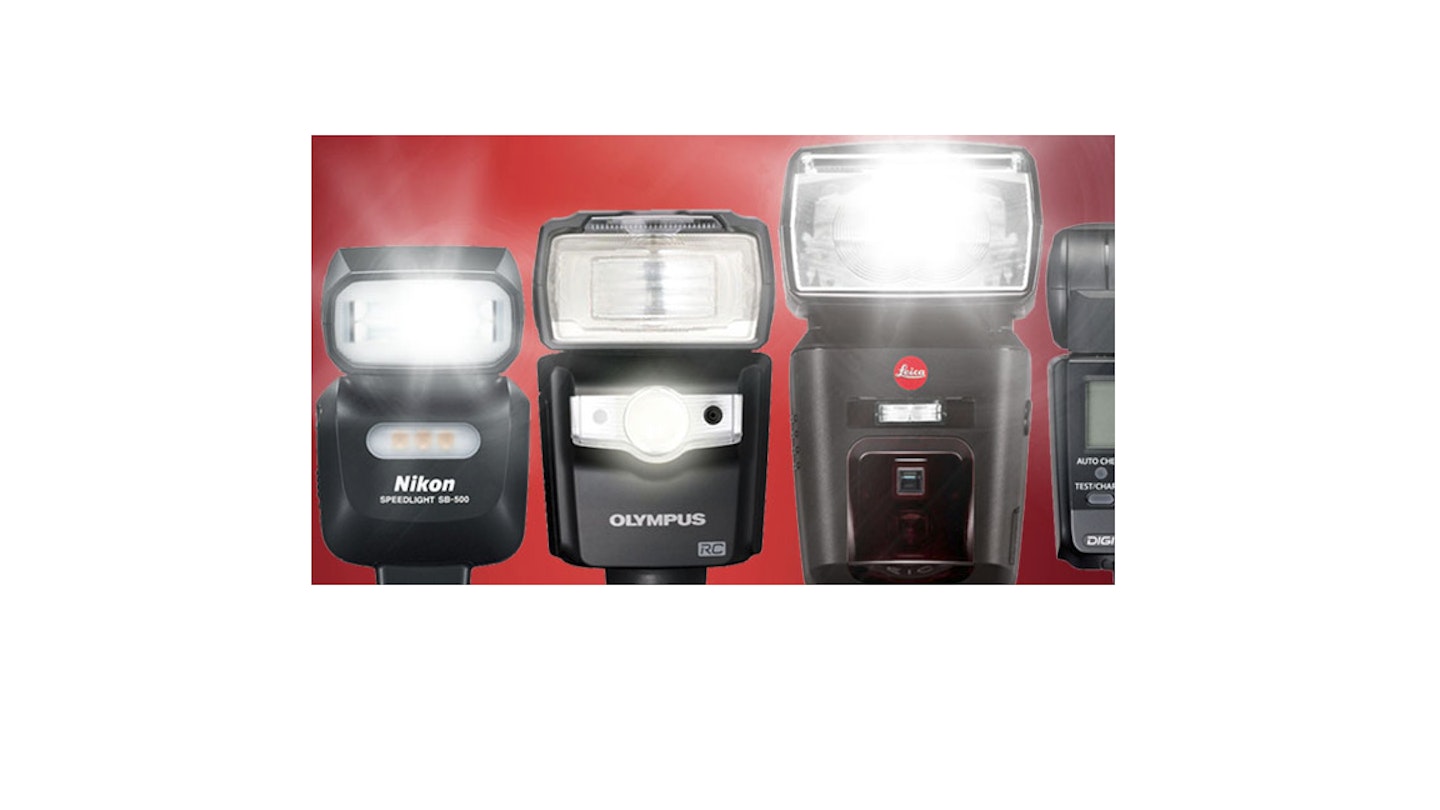
The E-520’s built-in pop-up flash works particularly well as a flash commander unit in low light; it’s basically the same system as on the professional E-3 model. The Live View system is one of the best on the market and works extremely well, although we’d like to see a higher quality screen to make the system truly shine.
The face detection feature does a good job of picking out faces, also adjusting focus and exposure to secure great people pictures. With some of the more advanced features such as highlight and shadow metering thrown into the mix, the E-520 is a good all-rounder for the whole family.
Results are sharp and have plenty of saturation throughout the ISO range, but while the FourThirds system has some problems with noise, it still manages to out-perform all the compacts on the market. From ISO 100 to 400, noise is well controlled; it’s only at ISO 800 that sufficient chroma noise poses a real nuisance. But even then, the noise has a certain film-like quality to it, rather than the harsh multi-coloured specks we used to see on many digital cameras.
Verdict While we were reviewing this camera, we couldn’t get past just how similar it is to the E-420. Yet when it comes down to price, it costs around £140 extra. In terms of extra features included for the price hike, the E-520 offers in-camera stabilisation, a slightly larger frame and, most importantly, a larger grip… but does this equate to good value for another £140?
Sadly, we have to say no. The E-420 offers something that no other D-SLR can manage – a decent handling experience in a pocket-sized camera. The E-520 on the other hand goes up against a whole host of cameras that out-perform it and significantly undercut it. In the 10MP class, there’s the Sony Alpha 200 at £229 (body only), the Nikon D60 at £359 (body only) and the Canon EOS 400D at £395 (kit price). And when compared against any of these models, the E-520 just doesn’t quite measure up.
Product Specifications
| Weight/size (WxHxD) |
475g/136x92x68mm |
| Effective resolution |
10MP |
| Lens mount |
FourThirds |
| Focal length conversion |
2x |
| Aspect ratio |
4:3 |
| LCD monitor size |
2.7in (230k dot)
|
| File formats |
JPEG, RAW (ORF) |
| Card type |
CF xD |
| Exposure modes |
Auto, program, aperture-priority, shutter-priority, manual and 20 scene modes |
| Metering modes |
ESP light metering, spot, centre-weighted, highlight & shadow |
| Autofocus |
Three-point (or 11-point using contrast AF in Live View)
|
| ISO range |
100-1600 |
| Battery type |
1x BLM-1 Lithium-ion |
| Software supplied |
Olympus Master 2
|
| Start-up time |
Less than 1 second |
| Write times |
1.75 seconds (JPEG), 1.85 seconds (RAW) |
| Shutter speed range |
60 seconds to 1/4000sec + bulb
|
| Flash sync |
1/180sec (1/4000sec Super FP Mode)
|
| Continuous shooting speed |
3fps for 13 JPEGs or 8 RAW files |