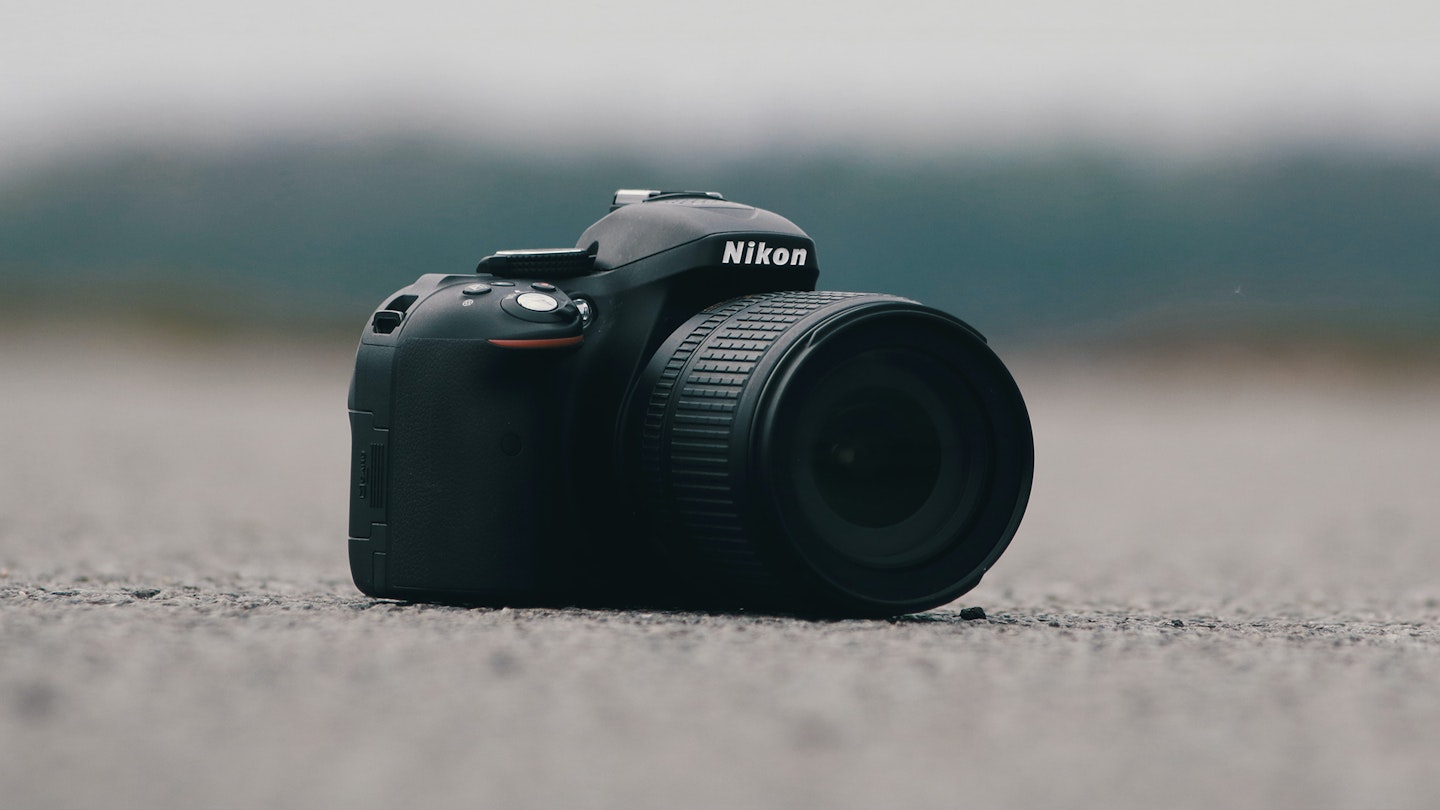
The original Nikon D3 was a landmark D-SLR when it was launched, so how does its replacement – the Nikon D3S – stack-up? Just over two years ago, Canon was pretty much having its own way in the professional sector, with an especially strong grip over the sport and editorial market. That soon changed with the launch of the D3, Nikon’s first full-frame D-SLR.
It packed in an impressive specification with a staggering performance, most notably its groundbreaking ISO range that stretched to an equivalent of 25,600. This high sensitivity was matched by the best Noise handling ever seen on a D-SLR, and this opened a host of photo possibilities that made many pro Canon users make the switch. It also earned the Nikon D3 the nickname Black Gold in pro circles.
Now, we have the Nikon D3S; not a completely new model, but what Nikon is claiming to be its biggest ‘S’ upgrade to a D-SLR to date. So, just how good is it?
Features & buildAs it’s an S upgrade, the design of the Nikon D3S remains almost exactly the same as the outgoing D3 (and its 24.5Mp D3X big brother for that matter), bar a couple of subtle button inclusions. This tried and tested design is primarily constructed from magnesium alloy and tips the scales at 1.24Kg. As you’d expect from a professional D-SLR, there’s an array of weather-sealing to protect it from the hostile environments it may be used in.
The resolution remains the same at 12.1Mp, but the full-frame chip has been completely redesigned and now offers a staggering ISO range from 200-12,800, which is impressive in itself before you consider that it can be expanded to an ISO equivalent of 102,400 at its Hi3 setting. It can also be lowered to an ISO equivalent of 100 if you need slower shutter speeds, and this can be handy for bright conditions and studio work.
The D3S maintains the same 51-point Multi-CAM3500FX AF system that was first seen in the D3, offering four Dynamic-area AF options, including 3D Focus Tracking, though it has been fine-tuned for improved AF acquisition.
The EXPEED image-processing engine allows for the same fast 9fps (frames per second) as the Nikon D3, along with the 1.5x DX (5.1Mp at 11fps) and 5:4 ratio (10Mp at 9fps) crop modes that were seen on the D3. Now there’s also a 1.2x crop mode on the D3S to offer just a bit more reach, though at a reduced resolution of 8.4Mp.
Another new addition to the Nikon D3S is the Quiet drive mode that was first seen on the D300S. This reduces the usual shutter noise, and could be an advantage for wildlife and social photographers.
Live View has also benefited from some attention, with a dedicated LV button at the rear of the camera, while the contrast-detect AF has been improved and the virtual horizon can now be laid over the video feed, too.
As you may expect, there’s the ability to capture HD video at 720p/24fps and, along with manual focus, there’s the option to use the D3S’s contrast-detect AF for autofocus as well. For sound duties, a connection for a stereo mic is provided.
Other new features of note are in-camera RAW processing, improved Active D-Lighting options that now have five modes, and image sensor cleaning. The latter hasn’t affected the viewfinder coverage; this still remains at 100%.
Performance & handlingWhile the Nikon D3 was impressive when it came to performance, the Nikon D3S has been beefed-up even further. You can now shoot 48 RAW files at 9fps before the buffer gets clogged-up, compared to 20 on the D3. It’s a similar story for JPEGs, shooting 130 files consecutively compared to 65 on the D3. Write speeds are just as rapid, taking a little over a second for a RAW file and less than a second for a JPEG.
Though not a new AF system, the D3S’s 51-point arrangement (the central 15 are the more sensitive cross-type variety) is excellent and can be tailored to your shooting requirements. This includes the amount of Dynamic AF points that are active (9, 21, 51 or 51 with 3D tracking), the level of bias towards subjects in the front of the frame or in the distance (now in 5 stages) and AF point selection (11 or 51 points). As mentioned, there’s the option of 3D tracking, which is linked into the D3S’s Scene Recognition System, to help track your subject from point-to-point. The AF system on the D3S is excellent, locking on to subjects quickly, while the focus tracking and customisation are first-class.
Pick up the D3S and while there’s no getting away from the fact that it’s a heavy beast, you’re left in no doubt that it’s a professional piece of kit designed to do a job. There are an array of controls dotted round the body offering quick access to a range of settings, while the multi-directional D-Pad offers precise AF selection and navigation round the D3S’s menu system. There’s a simple choice of 4 shooting modes – M, A, S, P – and along with the top-plate LCD that shows core shooting modes, there’s a smaller LCD on the rear of the camera underneath the screen with settings for ISO, Quality and WB.
Familiar with Nikon D-SLRs, you should feel right at home with the D3S, even though there’s an extensive list of settings available. Interestingly, the method for zooming in and checking an image is completely different from any other current Nikon D-SLR and isn’t quite as intuitive, though similar to preceding D-series Nikon D-SLRs. All-in-all, the D3S is a joy to use.
Value & verdictThere’s no getting away from the fact that £3999 is a lot of cash to blow on a camera, but it’s actually a tad cheaper than the recently-announced Canon EOS-1D MkIV, its closest competitor. And for professionals, the price will play a smaller part in the decision.
The Nikon D3 was still the best pro high-ISO model on the market when the Nikon D3S was announced, but Nikon has somehow managed to improve on it further still. The performance is rapid, it has excellent handling characteristics and a rock-solid build. That’s not forgetting image quality, with a high ISO performance that sets a new benchmark for D-SLRs. While these improvements and additions are all welcome, for existing D3 owners there’s probably not quite enough here to justify the upgrade, and while it might not be quite as groundbreaking as the original D3, it’s still a phenomenal piece of kit that’s at the top of its game. Now we just have to sit back and wait for the technology to appear on more affordable models!
AT A GLANCEStreet Price (body only) £1699
Resolution 12.1Mp (4256x2832 pixels)
Lens mount Nikon F
Focal length multiplication 1x
Focusing 51-point selectable
Burst rate 9fps
ISO range 200-12800, expandable to 100(L1.0)-102400 (H3.0)
Shutter range 30secs-1/8000secs, Bulb
Monitor 3.0in, 921K dot VGA
Live View Yes
Video 1280x720 @ 24fps
Storage CompactFlash (dual slots)
Weight 1240g
Dimensions 159.5x157x87.5mm
Visit www.nikon.co.uk