Photo answers review
Photo answers rating 
Features & Handling
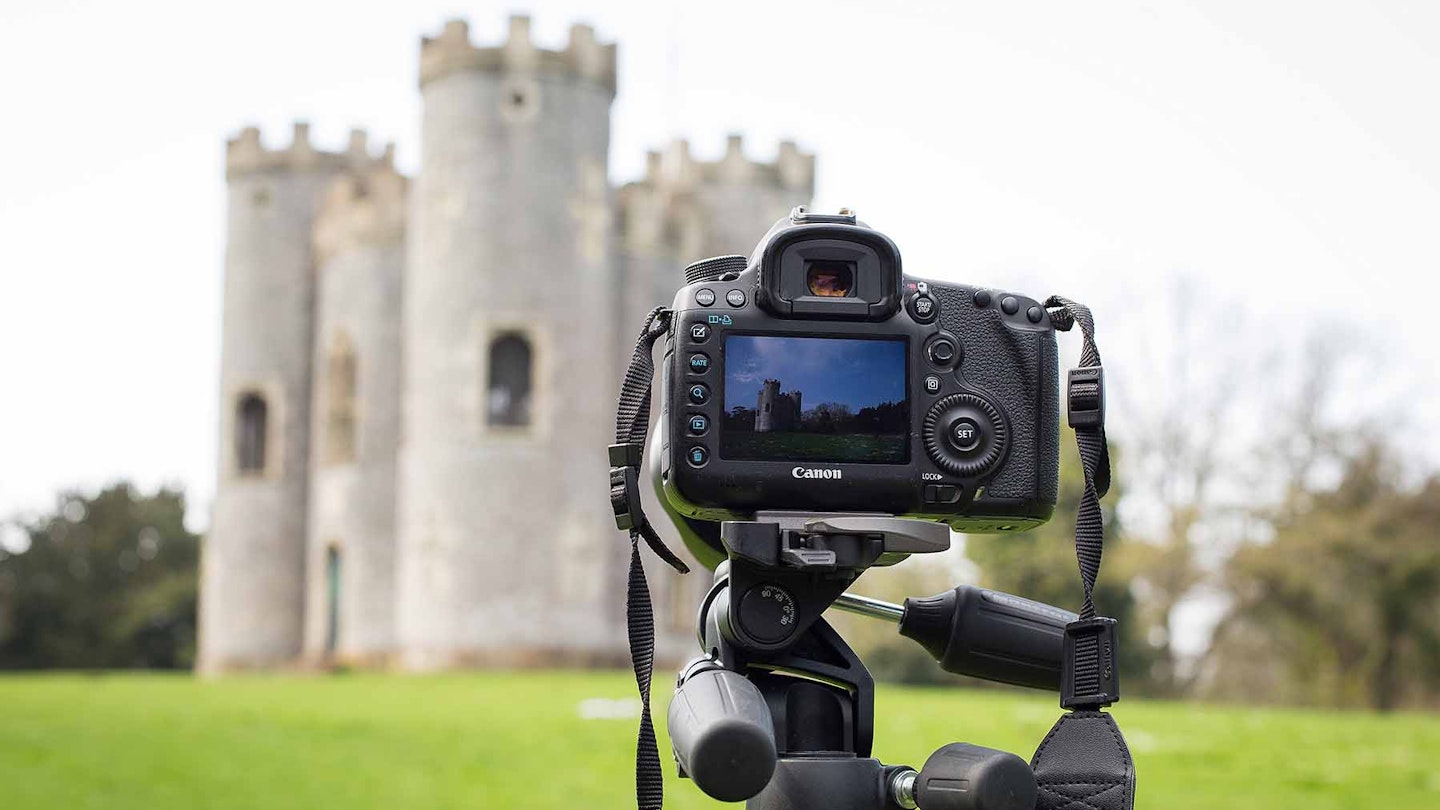
The Canon 1Ds Mark III’s most outstanding asset is its 21MP CMOS sensor. Put simply, this makes it the highest resolution D-SLR around. Other than this full-frame sensor, everything else is very similar to the EOS-1D Mark III.
Like the 1D Mark III, there are two DIGIC III processors to help speed up the camera’s performance and you can use Live View on the 3in monitor – a clear improvement from the 2in screen on the EOS-1Ds Mark II.
The autofocus system is straight out of the EOS-1D Mark III, with 19 cross-type AF points and 26 assist points, totalling an impressive 45 points in total for accurate focusing.
To change the ISO, shooting mode, focus or metering options, you press and release the relevant button and then scroll through the options with the dials. The option is still live until you press the button again or half-press the shutter release which could result in the settings being changed accidentally in the field.
There are one or two other things that also annoy. The drive and autofocus options share one button and which option changes depends on which input wheel you dial. White balance and image quality are combined into one control – press once for quality, press again for white balance. Again, one little mistake in the field and instead of selecting the right colour temperature, you could end up shooting in small JPEG mode instead.
Performance
The 1Ds Mark III shoots at 5fps. That’s pretty good considering that it’s shifting 17.8MB RAW or 7.9MB (60MB uncompressed) JPEG files but it’s 5fps less than the 1D Mark III.
Although we’ve averaged the write times out to around 2 seconds for a RAW or 1 second for a JPEG, they will range from just slightly faster to nearly double the time too, even in controlled test situations.
The larger 3in screen makes it easier to see your pictures, but it is disappointing that it still only offers 230k dots. This is the same as the 2in screen on the Mark II, meaning the quality of the screen is less than the Nikon D3, Nikon D300, Olympus E-3 and Sony @700.
In terms of image quality you’d expect a lot from such a big sensor and you get it. Canon cameras often produce neutral results but the EOS-1Ds Mark III produces very vibrant colours.
Noise levels are similar to that experienced with the EOS-1D Mark III, so the 1Ds Mark III only really offers a higher resolution rather than a massive increase in overall image quality. This would be considered as excellent had the Nikon D3 not come along recently and moved the goalposts. When viewed at the same size, there is greater evidence of noise on the higher ISO settings from this camera compared to the results from the Nikon D3.
Verdict
If you want the highest resolution available in a D-SLR and are prepared to pay for it, then this is your camera. For many pros, the EOS-1Ds Mark III will prove itself to be a very capable workhorse. The levels of noise may not be as good as on the Nikon D3, but the results are still impressive.
For an enthusiast photographer, the camera just isn’t worth twice the price of the EOS-1D Mark III, simply because you’ll never need all the extra resolution it provides.
|
Weight/size (WxHxD):
|
1210g/156x160x80mm
|
|
Effective resolution:
|
21.1MP
|
|
Lens mount:
|
Canon EF (excludes EF-S lenses)
|
|
Focal length conversion:
|
1x (Full-frame)
|
|
Aspect ratio:
|
3:2
|
|
LCD monitor size:
|
3in (Live View)
|
|
File formats:
|
JPEG, RAW (CR2)
|
|
Card type:
|
CF & SD (Dual slots)
|
|
Exposure modes:
|
Program, shutter-priority, aperture-priority and manual + Bulb
|
|
Metering modes:
|
Evaluative, partial, spot, multi/spot, centre-weighted average metering
|
|
Autofocus:
|
19 cross-type AF points (plus 26 Assist AF points)
|
|
ISO range:
|
100-1600. Expandable to Lo (50) and Hi (3200)
|
|
Battery type:
|
1x Lithium-ion LP-E4
|
|
Software supplied:
|
Canon DPP
|
|
Start-up time:
|
Less than 1 second
|
|
Write times:
|
2 seconds (RAW), 1.3 seconds (sRAW), 1 second (JPEG)
|
|
Shutter speed range:
|
30 seconds to 1/8000sec + Bulb
|
|
Flash sync:
|
1/250sec
|
|
Continuous shooting speed:
|
5fps for 15 frames (RAW), 40 frames (sRAW), 103 frames (JPEG)
|