Click Thumbnails to Enlarge
Shoot a gritty indoor portrait
Techniques
24 October 2007 14:54
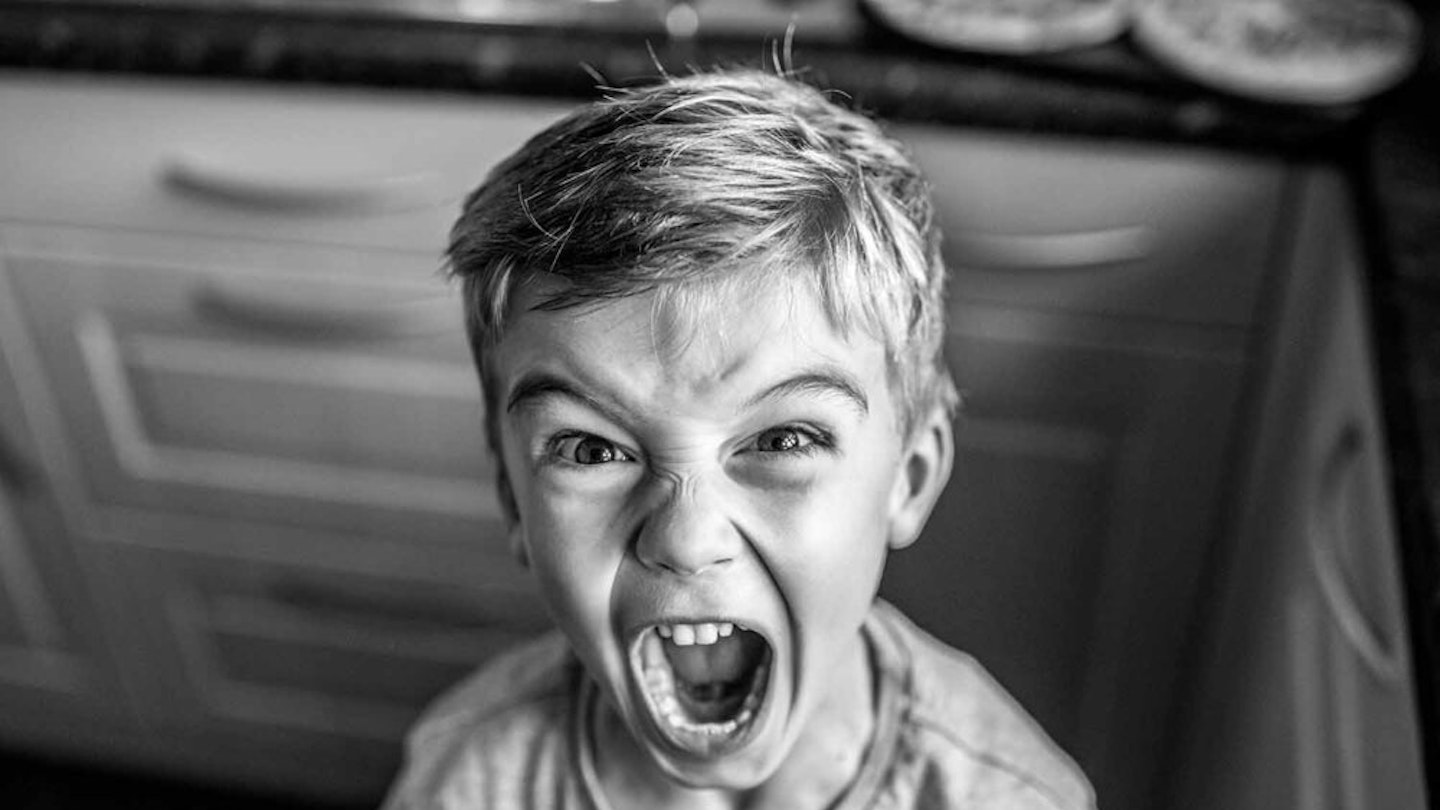
When it comes to shooting portraits you need to match your idea to your subject, so when we had the idea of shooting a high-contrast, moody black & white image we needed to find a model with enough character in their face to suit this type of shot.
Once we’d spread the word that we needed likely subjects it took a little time before anyone came forward, as not everyone is comfortable with the idea of this type of gritty portrait. Eventually we found a friend’s father, Len, who was more than happy to have his portrait taken, as he needed some pictures to accompany some short stories that he had just written.
Even though Len was fine about facing the camera, a professional studio can be a daunting experience for people who aren’t used to having their photo taken, so we decided to take the studio set-up to him. The familiarity of their own surroundings will often put your model more at ease, and despite the more limited equipment you can still produce excellent results.
We wanted to use a simple black background for our shots, so when we met Len for the shoot we took along a roll of black paper and a background support. When you’re working in someone else’s house it pays to take along a selection of backgrounds, as you don’t know what’s going to be available at your location. As an alternative to this background you could also use a piece of material, or a plain wall if there’s one available.
To give us the maximum room available to shoot from, we decided to position Len at one end of the room. However, this meant there was a window directly behind him, so we had to draw the curtains to stop any light spilling onto the background and messing up our shot.
For the high contrast image we were after we needed to keep the lighting simple. We took two lights along, in case we needed to add some fill-in light to lighten the shadows. The main light was positioned high up and at 45 degrees from the camera, and pointed at Len through a brolly to soften the light.
The light was about 2m from Len, and it was set to the minimum power output available, as we wanted a wide aperture for minimum depth-of-field. This set-up gave us an aperture of f/4. Ideally we would have moved the flash further away for an even wider aperture, but in the limited space available this proved fine for our result. The extra fill-in light was placed just to the right of the camera, and bounced into a brolly to lower the output to suit the main light. We used this set-up for some shots, but the most successful, punchy, images were taken using just the main light.
No matter what type of lighting you use, one of the keys to adding life to your portraits is getting a catchlight in the model’s eye. With a simple one light set-up, get your subject to face the light and check through the viewfinder to make sure you can see the reflection in their eye.
If you’re using several lights, try to avoid getting more than one catchlight, as this is too distracting and looks very false. You’ll need to take extra care with the positioning of your additional lights, so this is something best avoided when you’re trying to set-up a studio in limited space.
To add a bit of variety into your shots, don’t slavishly follow the common rules such as always getting your subject to look directly into the camera. We shot a number of images with Len looking away from the camera, for a more ambiguous image. We also tried shooting very tight close-ups of his face and from a variety of different angles to ensure we had the shot we were after.
To get the most out of any portrait session you need to talk to the model almost constantly. Don’t be afraid to direct them, as even experienced models won’t know exactly what you’re looking for, where to look and when things are working well if you don’t tell them clearly.
Shooting colour portraits at home, even if you’ve got the luxury of a flash unit, can pose problems with colour casts. Coloured walls can reflect back onto your subject, and the mixture of light from daylight, household lamps and flash makes getting an accurate colour balance almost impossible.
Shooting with black & white film or converting your digital shots to mono will get around this, and give your portraits a classic feel too.