Click Thumbnails to Enlarge
How to shoot urban landscapes
Techniques
24 October 2007 09:02
You don’t have to head out into the countryside to get great images. There are loads of picture opportunities among the crowds, landmarks and buildings much closer to the towns and cities where most of us live.
The first thing to bear in mind, when working in any busy town or city, is that pedestrians and traffic will be hard to avoid. There are two main ways of dealing with this – either choose a time and place where there are fewer people, or work with them as part of the composition.
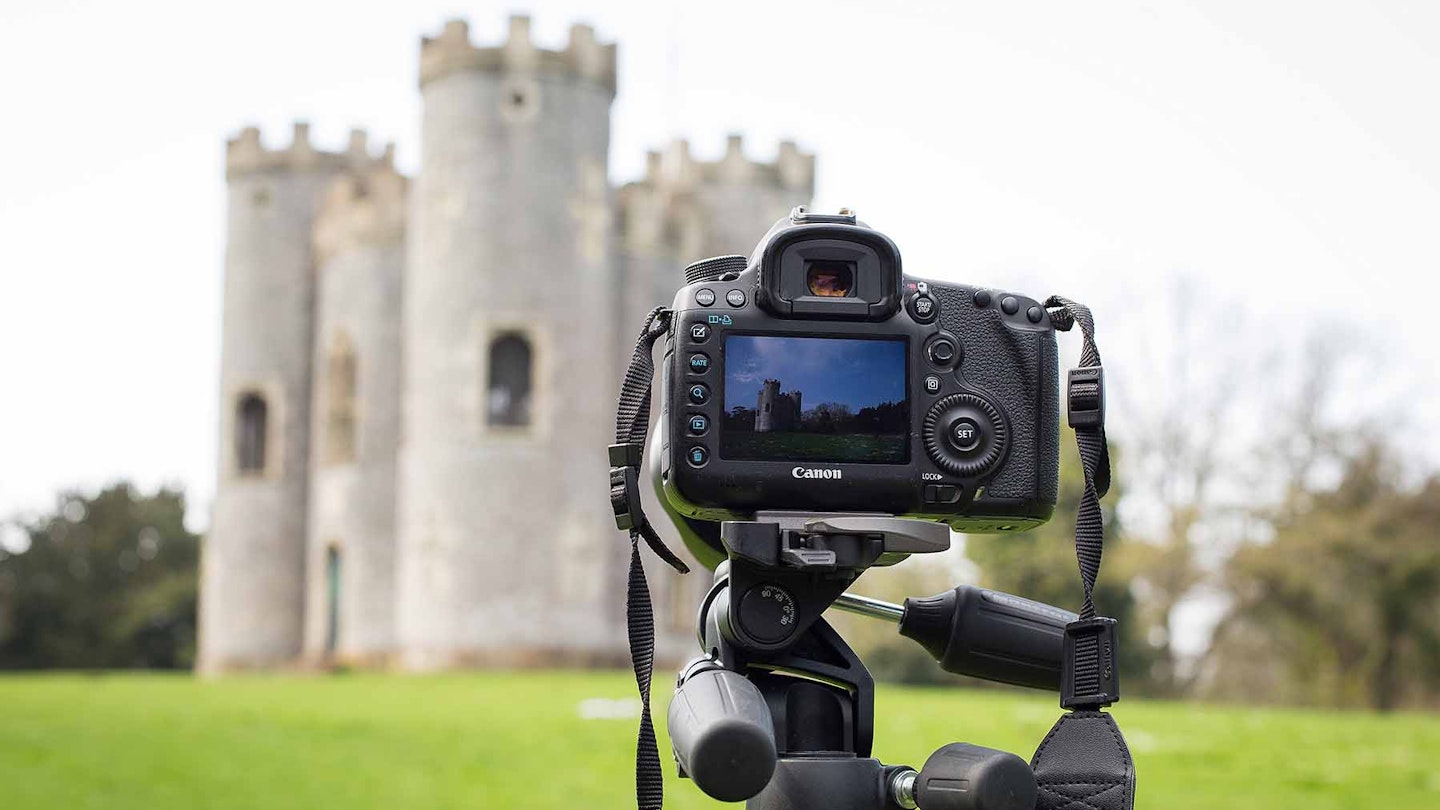
Early morning, especially on a Sunday, is the best time to find the least traffic in most inner-city locations. This is the ideal time to shoot famous landmarks and brooding cityscapes with deserted streets. However, it’s often more practical to make the hustle and bustle part of your images. Try photographing morning commuters for instance, or traffic trails at dusk. One of the best ways to shoot moving subjects in the landscape is to set the camera on a tripod and select a slow shutter speed to blur the movement. For slow-moving subjects, such as pedestrians, you’ll need to use a shutter speed of around 1/8sec to 1 second, while for faster moving traffic try speeds of 1/8sec to 1/30sec.
In bright conditions you’ll find it easier to achieve these shutter speeds if you fit a polarising filter, or even a Neutral Density filter, over the lens to reduce the amount of light reaching the camera’s sensor or film.
Crowds, congestion and taking pictures don’t always sit happily together. The sight of someone setting up a tripod on a busy city street can provoke reactions from pedestrians and authorities alike. It’s possible you’ll get angry glances or comments, while the over-zealous ‘tripod police’ can start quoting all sorts of privacy and private property bylaws to stop you taking pictures.
When it comes to pedestrians, apart from simply using common sense, one of the best ways to avoid conflict is to find viewpoints near street furniture, such as benches, signposts and postboxes, to shield you from the ‘flow’ of people.
Conventional architectural shots often include the street or road in the foreground. Try looking up for a more unusual angle with skyscrapers towering above. This viewpoint allows you to create striking images and avoid distracting elements such as traffic and people. Use your widest wide-angle lens to make the most of this viewpoint, and look for locations (such as a city financial district) where there are plenty of tall buildings to create a strong composition. You’ll also need a day when there’s plenty of detail in the sky, whether it’s clear blue or stormy clouds, to get the best effect.
Tall public buildings can also provide a vantage point for shooting the city skyline, too. Bear in mind that an uneven line of towers, domes, roads, bridges and rivers makes it almost impossible to use graduated filters (such as the ND grad) to balance exposures, without creating obvious darker areas across the tops of the structures. Far more subtle and useful is the polariser. This will help to cut out reflections, increase colour saturation and add extra punch to a blue sky.
Picking out details from a distance using a telephoto lens can give your shots a much more graphic look. A 70-300mm lens is ideal for these shots, with the zoom allowing you to fine-tune how much of the scene you include. This type of shot often relies on graphic shapes or strong colours to be a success, so look out for these among the distant buildings.
If you’re struggling to ‘see’ these shots with the naked eye, try scanning the scene looking through your camera with the telephoto lens attached. Eliminating the distractions at street level can help you to find potential shots. When you’re searching for detail shots, look out for reflections of the sky, other buildings or even people or traffic in glass or metal, as they can make strong images.